More than — doesn't mean better: why short menus sell more efficiently
Too large a choice of — is not always an advantage

When an entrepreneur forms a menu or assortment, the logic is usually simple: the more options, the more chances to guess the client's wishes. It seems that a wide selection of — is a competitive advantage, because everyone will find something different. But in practice, everything works differently.
In real business, too large a menu or assortment often does not help to sell, but on the contrary — interferes. Customers take longer to choose, doubt, delay decisions or buy nothing at all. And it's not just an observation —, it's a pattern that has been repeatedly confirmed by research in psychology and marketing.
One of the most famous experiments was conducted by researchers Sheena Iyengar and Mark Lepper. In the supermarket, they offered customers to taste jam. On one day — 6 options, on another — 24. More flavors attracted more attention, but the result of sales turned out to be the opposite of expectations: when there were fewer options, the purchase was made by about 30% of people, and when there were more than —, only about 3%. That is, a larger choice did not increase sales, but reduced them several times.
This effect was called “selection overload”. And it manifests itself not only in supermarkets, but in virtually every — business from coffee shops to online stores.
The reason is simple: people do not want to spend extra effort on choice. When there are too many options, instead of a sense of freedom, there is a sense of complexity. And the complexity of — is what the client subconsciously tries to avoid. That is why a short, thoughtful menu often works better than a large and versatile one.
How the client actually chooses: fast, emotional, not perfect
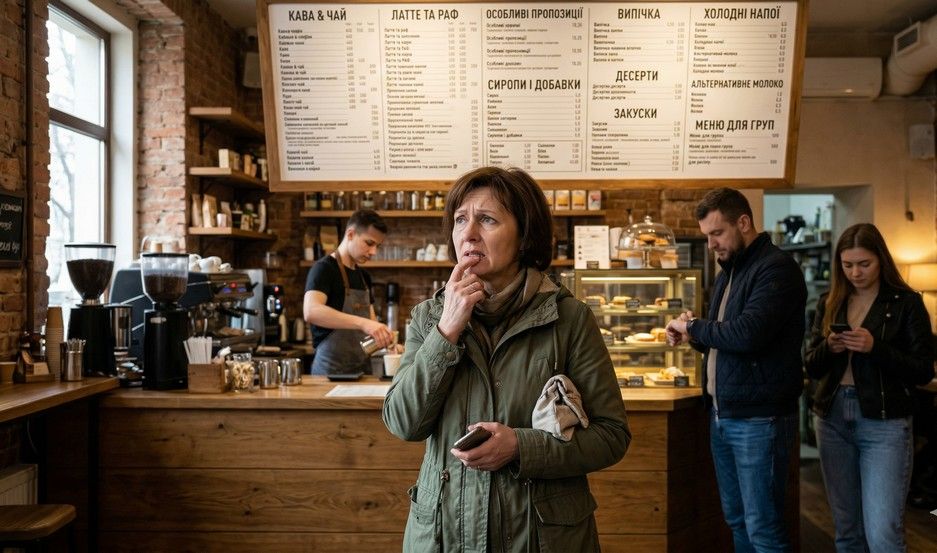
To understand why this happens, it is important to look at the selection process itself through the eyes of the client.
In theory, a person should act rationally: carefully review all options, compare them and choose the best one for himself. But in reality, almost no one does that.
Most decisions in everyday life are made quickly and with minimal effort. This is especially true in situations where the choice is not critical — such as what to order in a coffee shop or what dessert to take.
When a customer opens a menu, they don't want to analyze dozens of items. He wants to quickly find an option that suits him and move on. If the choice becomes more difficult, the brain begins to work differently. Instead of choosing, a person begins to doubt (“ is suddenly the best option?”), postpone the decision or choose the simplest and most familiar. In psychology, this is a manifestation of overload with the choice of —, when a large number of options does not help, but prevents making a decision.
Research shows that in such conditions, the number of refusals to buy increases and confidence in one's own choice decreases. Even after a purchase, people are more likely to be less satisfied if the choice was difficult.
In everyday life, it is familiar to everyone. The client opens a large menu, flips pages, goes back, thinks — for a long time and eventually either takes something “as usual” or says at all: “Let's go later”.
And vice versa: when the menu is short and clear, the decision is made almost instantly. A person does not feel tension, does not doubt and moves to the purchase much more easily.
That is why it is important not just to give a choice, but to make it simple. Because the client is not looking for an ideal option —, he is looking for an option that is easy to choose.
What happens to sales when the menu is shortened
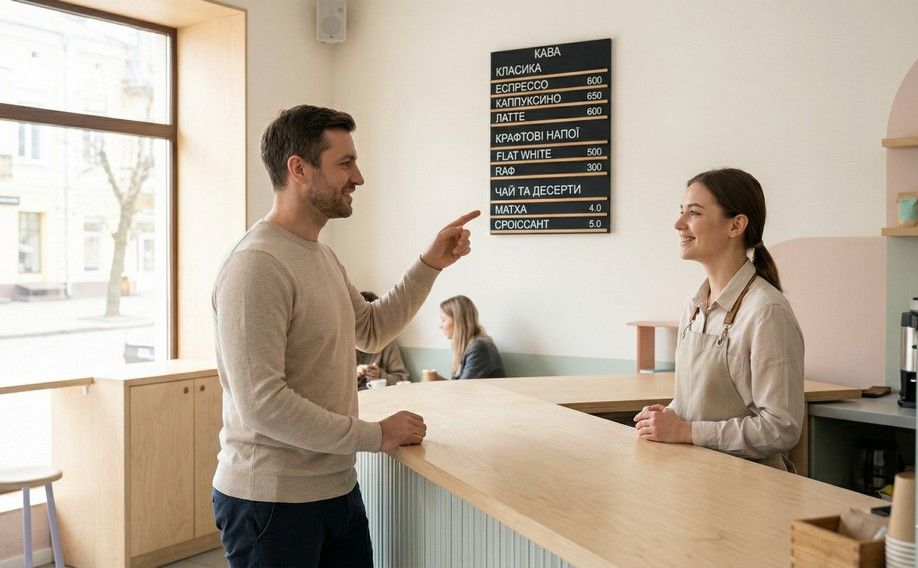
At this stage, many entrepreneurs have a completely logical question: if part of the positions are removed, will sales not fall?
Intuition suggests that the choice should be as wide as possible. But practice and research show something else: in many cases, reducing the menu does not reduce, but on the contrary, — increases revenue. The reason is that selling — is not only about the assortment. It's about how easy the client gets to the “take” solution.
When the menu is short and clear, several changes occur at once. First, the client chooses faster. This means that more people can be served in the same time. This is especially noticeable during peak hours: fewer delays — more checks.
Secondly, the very probability of purchase increases. When a person does not need to think and doubt for a long time, he less often postpones the decision or refuses. That is, fewer lost customers at the selection stage.
Thirdly, the structure of orders is changing. In the short menu, the client more often chooses from those positions that you deliberately left, — is usually more popular or more profitable for business dishes. In the big menu, these positions are simply lost among others.
It is interesting that in the practice of menu analysis, the same pattern is often revealed: a significant part of the items almost does not affect the revenue, but creates complexity for the client and a load for the kitchen. When such positions are removed, the business does not lose sales — it gets rid of excess. As a result, the menu starts to work as a tool, not just as a list.
And most importantly: these changes take place without additional costs. No ads, no team expansion, no new investments. Only due to the fact that it has become easier for the client to buy.
Simple example: two institutions — different results
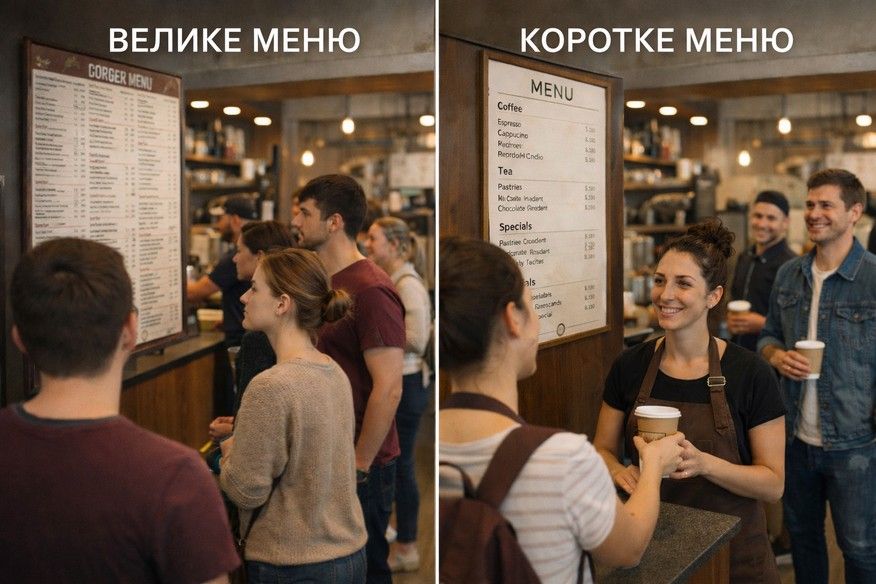
To see the difference even more clearly, let's imagine two coffee shops in the same area. They have the same flow of people, similar prices and approximately the same quality of the product. The difference is only in the menu.
The first coffee shop — has a large menu: dozens of items, many variations of drinks, desserts and additional options. It has a “curve many and varied”.
In the second —, the menu is short: only the main positions, clearly divided into categories, without unnecessary.
At first glance, the first coffee shop has the appearance of being more flexible and customer-oriented. But if you look at the behavior of people —, the picture is different.
In the first coffee shop, the customer watches the menu for a long time. He flips, compares, turns back, hesitates. The queue moves more slowly. Some people get nervous or in a hurry and eventually take something easiest — or refuse.
Things are getting faster in the second coffee shop. The client opens the menu, finds an option in a few seconds and places an order. It has no feeling of overload, no doubts — and therefore it often adds something else: dessert, an additional drink.
As a result, the difference is manifested in numbers. A second coffee shop can serve more customers in the same time. And also — get a slightly larger check from each order. Even a small difference in these indicators per day gives a tangible effect in just a few weeks.
And the most important thing: it is not about “less positions”, but about the fact that it has become easier for the client to make a decision. That is why a short menu often wins not because it has less choice, but because it is easier to choose.
How many options — is “is enough” to choose from
At this point, a logical question arises: if the large menu does not work, then how many positions should “be normal”?
Unfortunately, there is no universal number. It cannot be said that, for example, 10 positions — is good, and 15 — is already bad. But psychological and marketing research provides a clear understanding of something else: it's not about the exact number, but how easy it is for a person to make a choice.
There is even a pattern that is confirmed by various experiments: the pleasure of choosing increases when there are more options —, but only up to a certain point. After that, the opposite effect begins: the more options, the more difficult it is to choose and the less pleasure from the process itself. A person does not compare dozens of options at the same time. Even if it has a large menu in front of it, it actually looks at only a few — items that immediately attracted attention. The rest is either ignored or creates a feeling of overload.
That is why marketing and UX design often focus on an approach where there are approximately 5–8 options left within the same category. This is not a strict rule, but it is the range in which it is easiest for a person to compare and make a decision without unnecessary stress.
It is important to understand one more point. Sometimes the problem is not in quantity, but in similarity. If you have 10 positions that are not much different from each other, the choice will be more difficult than with 15 positions that are clearly different from each other.
Therefore, the key task of — is not just to shorten the menu, but to make it clear. The client must quickly answer the question: “How do these options differ and what is right for me?” If the answer is easy, there are enough options. If you have to think for a long time — there are already too many of them.
Why a short menu is more profitable for a business, not just a client
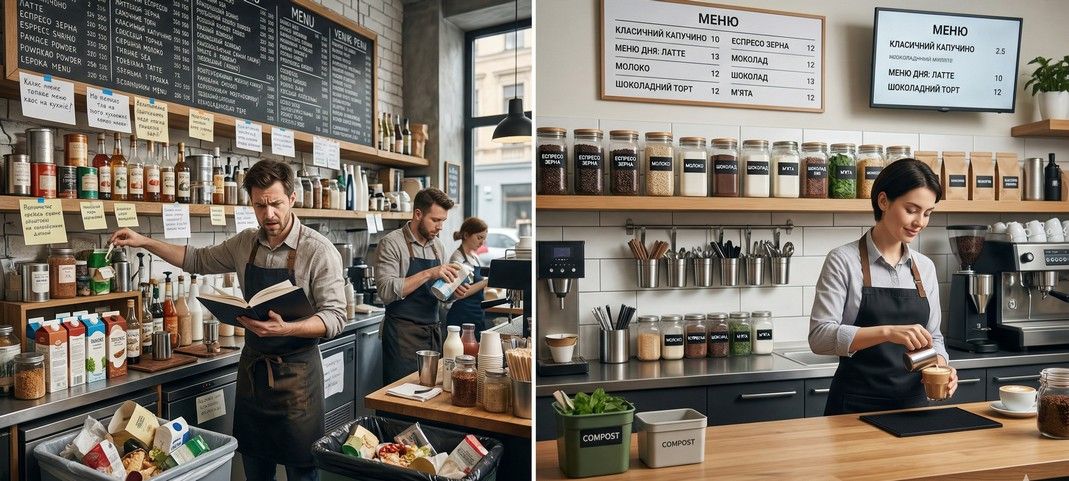
At this stage, it is important to take a step further and look at the situation not only through the eyes of the client, but also from the position of the business owner.
A short — menu is not only about the convenience of choosing. It is also about control, efficiency and predictability in daily work.
Let's start with the simplest — operating room. When there are many positions, each of them needs ingredients, preparation, space in the warehouse, and the attention of the staff. Some products are rarely used, something spoils, something is written off. As a result, the business loses money not because of sales, but because of inefficiency.
The short menu works differently. It concentrates on those positions that are actually sold. And this automatically gives several advantages: fewer write-offs, easier purchases, more stable quality.
Next — speed of work. When the menu is overloaded, the staff spends more time preparing and explaining to customers. The probability of errors, confusion, delays increases. This affects both the service and the number of customers served.
In the short menu, the processes are simplified. The team knows the product better, works faster and makes fewer mistakes. And this directly affects revenue.
Another important point of — management. When there are too many positions, it is more difficult to understand exactly what works and what does not. Some products blur the big picture, and making decisions becomes more difficult. When the menu is compact, the data becomes clearer. You can clearly see what is sold, on which days there are more orders, how the number of checks changes. In accounting systems like Kavapp, this is especially noticeable: you get real figures for sales, changes, periods and can make decisions based on facts, not feelings.
In other words, a short menu gives businesses what is difficult to get with a large assortment: control and clarity.
How to understand that your menu is already too large
The most interesting thing is that most owners do not notice the moment when the menu becomes overloaded. This usually happens gradually. A new position is added, then another, then a seasonal offer — and over time the menu grows so much that it starts working against you.
There are several distinctive signals to notice.
First — customer behavior. If people stand by the menu for a long time, hesitate, question or postpone ordering —, it almost always means that the choice is too difficult.
Second — uneven sales. Some items are sold continuously and some — rarely or almost never. This means that the menu is overloaded and contains unnecessary elements that do not bring results.
The third — difficulty in work. If the staff is often confused, spending more time preparing or explaining — is also a signal that the assortment is too large.
And another important point — is the feeling of the owner himself. If you find it difficult to quickly answer the question “, what we sell best and why”, it means that the system is overloaded.
In such a situation, the problem is not with customers or sales. The problem is that the choice has become more difficult than necessary. And the good news is that it's easy to fix — not by extension, but rather by simplification.
How to shorten the menu without the risk of losing customers

The idea of reducing the menu often causes internal resistance. There is fear: and suddenly customers won't find “their” position and leave? But in practice, the problem is usually not that there will be less choice. Problem — if you remove the wrong one. Therefore, it is important to act not intuitively, but consciously.
It is worth starting with a simple question: what do you really sell? Even basic analytics already provide many answers. If you look at the sales for the period, it becomes clear that part of the positions are repeated in the checks constantly, and part of the — rarely appears. This data is the best clue.
In Kavapp, for example, you can see the number of checks, the volume of sales for the period, compare days or weeks and thus see the overall picture. Separately available sales analysis that allows you to understand which items sell best. This helps to optimize the assortment and make it more understandable for the client. And this is enough to draw the first conclusions: which positions form the basis of revenue, and which only complicate the menu.
Next, it is important not to make sudden movements. A gradual approach works best. You can remove a few of the weakest positions and see how the situation changes. In most cases, nothing critical happens — customers simply choose from what is left.
Another important principle of — is not to leave a void. When you shorten the menu, it is important that there are enough options left in each category to choose from, but without overloading. The client should feel that the choice is —, it's just clear.
And finally, it's worth remembering: the — menu is not a static document. It can and should be viewed. Add new positions, test, remove things that don't work. But doing it is not chaotic, but based on real data.
This approach gives the best result: you do not lose customers, but on the contrary — makes their experience easier and more pleasant.
Less than — means clearer and more profitable
The idea of a short menu may seem like a limitation at first glance. But if you look deeper, this is a tool that helps businesses work more efficiently.
Customers are not looking for the widest possible choice. They are looking for a simple and clear way to make a purchase. And when you give them that opportunity — they choose more often and come back more often.
For business, this means more than just convenience. These are faster service, more stable processes, less costs and a clearer understanding of what happens to sales. And the main thing is — the ability to make decisions not “on the sense of”, but on the basis of real numbers.
The short menu — is not about “cutting”. It's about leaving the main thing. And this is the main thing in the end and brings results.
Read Also


