Regular customers as the basis of income: what makes people come back
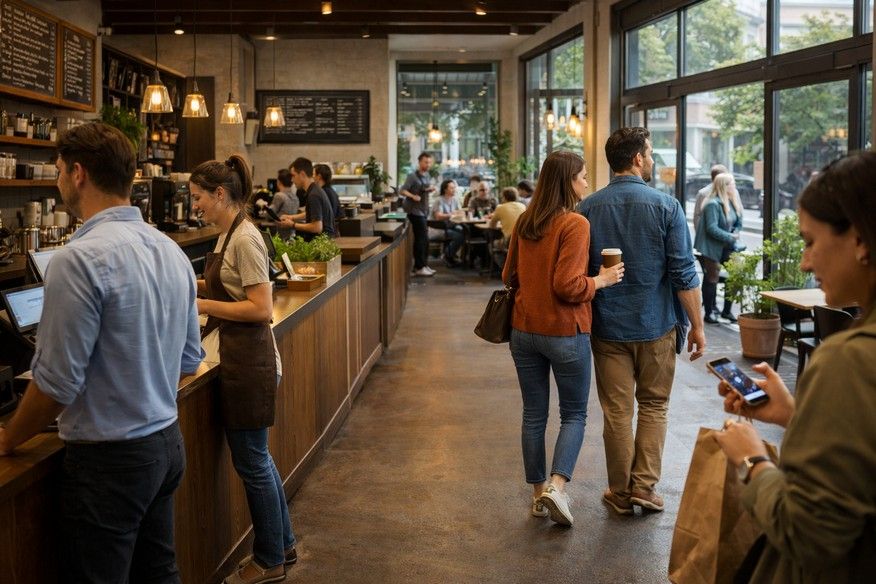
New customers — is good, but it's not enough
Most businesses think the same way about growth: more customers are needed. More ads, more promotions, more coverage — and then sales will go up. And this is partly true. New customers are needed. Business does not develop without them. But there is an important nuance that is often underestimated: new customers do not give stability.
Imagine two institutions. The first constantly invests in advertising, regularly launches promotions, brings new people. But most of them come once and never come back. To maintain the level of sales, you have to spend money again and again to attract new customers.
The second establishment does less advertising, but has a different situation: people return. They come again and again, bring acquaintances, form a stable flow. And even if there are fewer new customers at some point, the business does not “sag so much.
From the point of view of daily work, the difference is colossal. In the first case, the business is constantly trying to catch up with the result. In the second —, it has a base to rest on.
It is important to understand a simple but very practical truth:
👉 customer acquisition — is a cost, and customer return — is a profit.
To bring a new person, you spend time, money, other resources. Advertising, promotions, discounts — all cost. But if this person returns alone, without additional incentives, each subsequent purchase becomes much more profitable for the business. That is why stability is not built on the flow of new customers. It is built on those who already know you and choose you again. And if you look at any strong business — coffee shop, shop, restaurant — it always has “its” people. Those who come regularly. Those who don't compare every time, but just come back.
Why customers return
It seems that the main reason for returning — is the product. If it is tasty, high-quality, profitable, — the client will come again. And this is true, but only partially. In real life, people return not only for the product. They return for the feeling they get.
Imagine the situation. There are two places with approximately the same coffee. One — is a little tastier, but sometimes you have to wait, sometimes something is unclear, sometimes the quality changes. Otherwise, — is stable: fast, of course, without surprises.
Where will a person go a second time? In most cases, — is where it is more stable. Because predictability is very important to the client. He is comfortable where he knows what to expect. Where you don't need to figure it out every time, where the process is familiar, where there is no unnecessary stress.
This is clearly visible in our daily habits. A person can pass by several institutions, but enter the same one. Not because he is objectively the best, but because he is already familiar. There is no need to think for a long time, look for, choose...
This is precisely the power of repeat customers: they do not choose anew every time. They just come back. And here an important role is played not only by the product, but by all experience:
- how fast are they serving,
- how clear the process is,
- is it comfortable to be,
- there are no unpleasant little things.
The client does not divide it into components. He does not think: “There is good process logic and normal service”. He just feels: “I'm comfortable here”. And it is this feeling that causes the return.
Therefore, if you look deeper, people return not only for the product. They return to a place where it is easy, understandable and comfortable for them.
How the habit of returning is formed

Just like it once is not enough for the customer to return regularly. The return of — is not a one-time solution, but a gradual process that is formed from repeated experience. And this process is based on habit.
People, in principle, tend to simplify their lives. If they have already found a place where everything is clear and works without problems, they have no desire to look for an alternative every time. On the contrary — a natural aspiration to repeat a familiar scenario emerges.
For example, a person entered a coffee shop several times on their way to work. I quickly received an order, without delays, without confusion. After several such repetitions, she no longer chooses where to go. She just goes there. This is how a habit is formed. A very simple logic works here: the less effort the client needs, the faster the habit is fixed. If every time everything happens more or less the same — quickly, of course, without surprises — a person stops spending energy on making a decision. She doesn't even notice it, but it's already a standard option for her.
That is why stability in service is often more important than ideality. A place where it is always good and predictable wins in places where sometimes it is very good and sometimes — is mediocre. Because in the second case, the client is forced to doubt every time: “How will it be today?”. And doubt — is what destroys the habit.
Another important point is — availability. If the business “is on the way”, if you don't need to change the route or spend more time, the chance of forming a habit is much higher. That is why even small points near offices or residential areas can have a very stable flow of customers.
The habit is not formed by chance. It appears where the customer does not need to make an effort. When everything happens simply and clearly, when the service is stable and does not let you down, when the institution fits comfortably into the daily route —, a person stops choosing every time. She just comes back. It is the combination of these things — simplicity, stability and availability — and creates the same habit that underlies the constant flow of customers.
Loyalty programs: why bonuses work

When the client already begins to develop a habit, it can be strengthened. Loyalty programs — bonuses, cashback, discount offers will help achieve this.
It is important to understand: this is not just a nice bonus, but a tool that affects the decision to return. From the client's point of view, it looks very simple. He already knows the institution, he is comfortable there. And here comes an additional reason to choose it: bonuses accumulate, a discount applies, there is a sense of benefit. At this point, the decision becomes even easier.
Imagine the situation. A person chooses between two coffee shops that suit him equally. In one of them, she already has bonuses or receives a small benefit from each purchase, in the other - not. In most cases, the choice will be obvious.
An important principle works here:
👉 even a small benefit can strongly influence behavior.
It is not necessary to offer large discounts. Often a small accumulation or a nice bonus is enough for the customer to feel: “It is beneficial for me to come back here”.
Another effect of — accumulation. When a person sees that he gets something with each purchase, it is psychologically more difficult for him to change his place. It's as if she has already invested in this business. Marketers know this well: people are more likely to return to places where there are already bonuses, even if the difference is small. Because they don't want to start from scratch elsewhere.
But it is important that the loyalty program remains simple and clear. If the client needs to understand the conditions, count or clarify something, the — effect is reduced. The benefit must be obvious.
As a result, bonuses and cashback do not work because they save money. They work because:
- simplify the choice,
- create a sense of benefit,
- they strengthen the habit of returning.
And it is in combination with convenient service that it gives the best result: the client not only comes, but also stays with you for a long time.
Which repels even regular customers
Many entrepreneurs are sure: if the client has already come — several times, then he “has established himself”. But in practice this is not the case. Regular customers are not permanently tied. They stay only as long as the experience meets their expectations. And most often people stop returning not because of something sudden, but because of gradual changes.
Imagine the situation. You regularly go to one place: it is convenient for you, everything is clear, the process is familiar. But over time, minor inconveniences begin to appear. Once they waited longer, another time they confused something, once again — it became less clear how to place an order. Each individual case seems not to be critical. But together they create a feeling: “Something has not become the way it was”. And this is enough for a person to start looking in the direction of alternatives.
The most dangerous thing is that business often does not notice this. The stream seems to be there, customers are coming, everything is working. But some people quietly “fall off” and never return.
One of the most common reasons for — instability. When everything is fine today and — is different tomorrow, the client's confidence disappears. He no longer knows what to expect. And uncertainty — is a strong trigger for failure.
Another factor — complication of the process. What used to be simple becomes more complicated: the logic of the menu changes, extra steps are added, and the obviousness disappears. The client does not formulate it directly, but feels discomfort.
And there is another important point — frustration effect. If a person is used to a certain level of service, any deterioration is perceived more strongly than if this level were from the very beginning. That is, the drop in quality is felt more acutely than its absence.
That is why regular customers — is not a given, but the result of constant work. They need not only to be attracted and kept, but also not to be lost because of small, at first glance, things. The rule here is very simple:
👉 the customer returns while it is consistently comfortable. As soon as it disappears — it looks for another place.
How to understand whether customers are returning
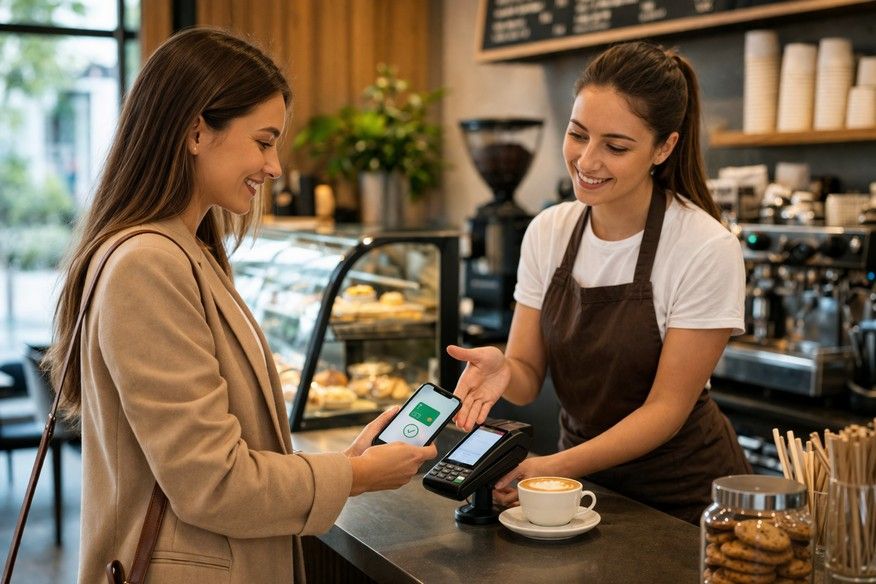
Many business decisions are made “on the sense”. It seems that there are enough customers, that people come, that everything works. But when it comes to repeat purchases, intuition is often misleading.
To understand whether customers are actually returning, you need to look at the numbers. What's more, it's important to remember: even without complex systems and detailed customer analytics, you can see the big picture.
First of all, it is worth paying attention to stability. If sales are more or less equal from day to day, unless there are drastic failures, this often means that the business has a permanent customer base. If the situation looks like “, then thick, then empty, this is a signal that the business strongly depends on random factors: promotions, advertising, external flow.
The second important indicator is — number of checks in dynamics. Not on one day, but in terms of weeks or months. If the number of checks gradually increases or at least stays at a stable level of —, this is a good sign. If it constantly jumps or drops —, you should think about whether customers are returning or whether you are constantly replacing some with others.
It is also useful to look at periods without active promotions. If sales fall sharply at such moments, it means that the business depends on incentives, not on customer loyalty. Conversely, if even without discounts and special offers, the flow is maintained, it is an indicator that people are returning on their own.
All this does not give an answer as to who exactly returned, but it gives an understanding of the general trend. And this is often enough to manage a business. The main thing is — to look not at individual numbers, but at the dynamics. Not for one day, but for a period. Not for feelings, but for facts. Because it is in the numbers that you can see what is not always noticeable in your daily work: whether you have a stable customer base or whether the business is constantly starting from scratch.
A systems approach: how it all works together

If you look at the previous articles of this cycle separately, it may seem that these are different topics: somewhere about the first impression, somewhere about promotions, somewhere about regular customers. But in real business, these are not separate tools — is one system. And it is the system that gives the result.
Let's imagine the client's path from the very beginning.
At first he just passes by. If nothing touches him, he won't come in. Therefore, the first impression and convenience of — is the first step. They answer the question: will there be a chance for sale at all.
Next, the client comes in and chooses. Promotions, combo offers, a clear menu, and a general atmosphere begin to work here. They help not just make a purchase, but make it bigger.
But everything does not end there. If the experience was convenient and predictable after the purchase, the customer returns. And here the third level of — habit and loyalty already works.
It turns out a simple but very important logic: first the client needs to be attracted, then help him buy more, and then make him come back. And if at least one element — falls out, the system stops working fully.
For example, you can make strong ads and bring many people, but if the process is inconvenient, they will not buy or return. Or you can sell well through stocks, but if there is no stable experience, customers will not become regular.
That is why it is important to look at business not as a set of individual actions, but as a complete system. When all these elements work together, the result becomes much more stable. Predictability appears, reliance on random factors – decreases, and business begins to grow more evenly.
Stability — is not a coincidence
In business, they often look for quick solutions: a new promotion, a new idea, a new way to attract attention. Sometimes it gives a short result. But true stability is not coming along.
It appears when the system is built. When it is easy for the client to come in and it is nice to be there. When he just makes a purchase. When he is comfortable returning.
This is not always immediately noticeable. This is not a sharp increase, but a gradual strengthening of positions. But it is this approach that gives a long-term result. And most importantly — it gives control.
You begin to understand what's going on in your business, why customers come or don't come, what's affecting sales. And you can not just react, but manage the situation. Thus, the business ceases to depend on random decisions and begins to work as a system where each element has its place. And it is in such a system that the main — stable income appears. Because the most valuable customer — is not the one you have attracted once. And the one who comes back again and again.
Read Also


